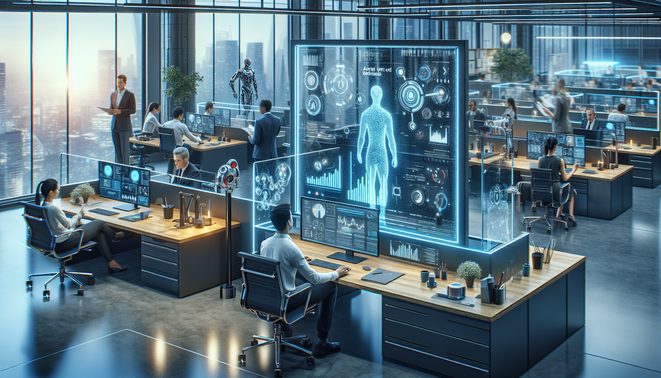
When Elon Musk’s Grok AI temporarily shut down its image generator after a public outcry over inappropriate content, it revealed something counterintuitive about our AI-driven future: the more powerful our artificial intelligence becomes, the more we need human judgment to govern it. Within days of the incident, xAI posted dozens of job openings for content moderators, safety engineers, and AI ethicists. This wasn’t an isolated response—it’s part of a seismic shift creating millions of jobs in a sector that barely existed three years ago.
Welcome to the trust and safety economy, where AI’s greatest weakness—its inability to grasp context, ethics, and cultural nuance—has become humanity’s greatest employment opportunity.
The Guardrails We Didn’t Know We Needed
The Grok controversy exposed what industry insiders have known for years: generative AI systems are remarkably powerful and remarkably naive. Unlike competitors like OpenAI’s DALL-E or Midjourney, which implemented extensive content restrictions, Grok launched with relatively permissive guardrails. The predictable result? Users immediately pushed boundaries, creating sexualized, harmful, and inappropriate imagery that sent the platform into emergency shutdown mode.
This pattern has repeated across the industry. Every major AI launch follows a similar arc: initial excitement, creative exploration, inevitable misuse, then a scramble to implement safety measures. But here’s what’s changed: companies now understand that safety can’t be an afterthought. Major tech platforms are investing over $2.3 billion in AI safety infrastructure in 2025 alone, and every major AI company now operates trust and safety teams that have grown by 300% since 2023.
These aren’t small operations. The average AI safety team at a major technology company now employs between 50 and 200 professionals spanning wildly diverse backgrounds—machine learning engineers working alongside psychologists, policy experts collaborating with cultural anthropologists, and legal specialists partnering with ethicists. It’s a uniquely interdisciplinary workforce addressing uniquely complex challenges.
The scale of this transformation becomes clear when you look at the numbers. Job postings for “AI safety engineer” have increased 485% year-over-year, with compensation ranging from $150,000 to over $400,000 annually. The content moderation workforce for generative AI is projected to grow 40% annually through 2027. Labor market analysts estimate 2 million new global jobs in AI safety, governance, and trust by 2030. The constraint isn’t demand—it’s finding qualified people.
The Great Reconfiguration: What’s Happening to Jobs
The employment impact of AI governance extends far beyond Silicon Valley hiring sprees. We’re witnessing a fundamental reconfiguration of the labor market, where jobs aren’t simply created or destroyed—they’re being radically transformed.
Consider graphic designers. Five years ago, a designer’s value came primarily from technical execution—the ability to use Photoshop, understand composition, and produce polished visuals. Today, AI tools can generate professional-quality images in seconds. Does this mean designers are obsolete? Quite the opposite. The role is evolving into something more strategic: AI art director. Rather than manually creating every element, designers now conceptualize, direct AI systems, curate outputs, and refine results. One creative director put it succinctly: “AI handles the mechanics; humans provide the soul.”
This pattern repeats across creative industries. Illustrators become prompt artists, combining traditional artistic sensibilities with deep understanding of how AI systems interpret instructions. Content managers transform into AI content strategists, navigating the complex terrain of human-created and AI-generated material. Even legal counsel is evolving, with attorneys specializing in AI-specific questions around copyright, liability, and emerging regulations.
The statistics tell the story: 67% of creative professionals now use AI tools in their workflow, and those who’ve embraced the technology report increased productivity and creative output. But there’s an uncomfortable truth beneath these optimistic numbers—the transformation isn’t evenly distributed. Entry-level positions focused on routine tasks face significant pressure. Junior graphic designers who previously cut their teeth on straightforward projects find those opportunities automated away. Stock photography companies report declining demand as AI-generated alternatives proliferate.
Yet even as some roles contract, entirely new categories emerge. Prompt engineers—specialists who craft optimal instructions for AI systems—command salaries between $80,000 and $200,000. AI auditors conduct adversarial testing to find system vulnerabilities, earning $100,000 to $220,000. Trust and safety managers oversee content moderation operations with compensation ranging from $100,000 to $200,000. These aren’t variations on existing jobs; they’re fundamentally new professional categories born from AI’s unique challenges.
Perhaps most striking is the rise of the AI ethicist—a role combining philosophy, technology, social science, and policy. These professionals develop ethical frameworks for AI deployment, navigate complex moral trade-offs, and ensure systems align with human values. As one tech CEO noted: “For every ten AI engineers building generative models, we need at least three focused on safety and ethics.”
The New Essential Skills: Technical Meets Human
What does it take to thrive in this transformed landscape? The answer challenges conventional wisdom about both technical and human skills.
On the technical side, you don’t necessarily need to be a programmer—but you do need technical literacy. Understanding how machine learning models work, what they can and cannot do, and how to effectively interact with them has become foundational. Prompt engineering might sound niche, but it’s rapidly becoming as essential as knowing how to use search engines or spreadsheets. The ability to coax desired outputs from AI systems through carefully crafted instructions is valuable across industries.
Data analysis skills matter more than ever, not for building models but for interpreting their behavior. When an AI system produces unexpected results, someone needs to investigate why. When safety measures fail, someone must analyze patterns and adjust guardrails. These tasks require comfort with data combined with critical thinking about complex systems.
But here’s where it gets interesting: the most valuable skills aren’t technical at all. They’re deeply, irreducibly human.
Ethical reasoning has moved from philosophy departments to corporate necessity. When AI systems make decisions affecting millions, someone must think through implications, identify potential harms, and navigate competing values. Cultural competency becomes critical when deploying systems globally—what’s acceptable in one context may be offensive in another, and AI doesn’t inherently understand these distinctions.
Judgment and decision-making skills are perhaps most crucial. Automated systems can handle straightforward cases, but edge cases—situations involving ambiguity, context, or competing considerations—require human wisdom. As one design leader observed, “The skills that matter now: taste, judgment, cultural awareness, ethical reasoning.”
Emotional intelligence takes on new importance, particularly in content moderation roles. Reviewers examining potentially harmful AI-generated content need psychological resilience, empathy for affected communities, and self-awareness about their own reactions. Companies are learning this the hard way, with growing attention to moderator wellness and mental health support.
Educational pathways are emerging rapidly. Universities now offer graduate programs in AI Ethics and Society, Trust and Safety Engineering, and AI Policy. Professional certifications are appearing, from “Certified AI Safety Professional” to specialized content moderation credentials. Tech companies including OpenAI, Google, and Microsoft offer courses and training programs, while bootcamps promise accelerated paths to prompt engineering and AI safety testing roles.
Navigating the Transition: A Realistic Path Forward
The transformation we’re witnessing is neither purely optimistic nor pessimistic—it’s complex, uneven, and still unfolding. The Grok incident reminds us that powerful technologies deployed without adequate governance create immediate crises. But those crises generate urgent demand for human expertise that AI cannot replace.
For individual workers, the imperative is clear: embrace continuous learning. Whether you’re a designer learning to direct AI tools, a manager understanding AI’s organizational implications, or a professional in any field, AI literacy is becoming as fundamental as digital literacy was twenty years ago. The workers thriving in this transition aren’t necessarily the most technically skilled—they’re the most adaptable, combining domain expertise with willingness to engage new tools.
For employers, the challenge is investment. Building adequate safety infrastructure costs money, and hiring qualified experts in a tight labor market is expensive. But as one policy analyst noted, “Think of AI compliance like financial compliance or data privacy. It becomes a core business function, not an afterthought.” Companies cutting corners on safety face not only public backlash but increasing regulatory pressure as jurisdictions worldwide develop AI governance frameworks.
For educators and policymakers, the responsibility is creating pathways. The skills gap is real—technology is evolving faster than traditional education systems can adapt. We need more flexible credentialing, stronger connections between industry and education, and support for workers transitioning between roles. The fundamental skills remain constant—critical thinking, ethical reasoning, communication—but their application context is shifting rapidly.
There’s a profound irony in our current moment: we’re building increasingly sophisticated artificial intelligence while simultaneously discovering that human wisdom, judgment, and ethical reasoning are more valuable than ever. The machines we create demand human oversight, and that demand is reshaping the future of work in ways we’re only beginning to understand.
The trust and safety economy isn’t a temporary response to growing pains—it’s a permanent feature of our AI-augmented world. As one technology researcher observed: “AI’s success depends on human wisdom.” That dependency, uncomfortable as it may be for automation enthusiasts, represents opportunity for millions of workers willing to develop the skills our new technological landscape requires.
The future of work isn’t humans versus machines. It’s humans governing machines, directing machines, and applying uniquely human capabilities to challenges that artificial intelligence, for all its power, cannot solve alone.