The Factory Floor Revolution: How Industrial AI is Rewriting the Rules of Work
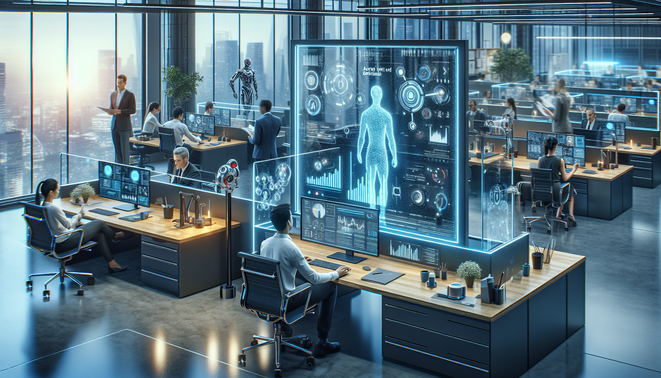
Picture a factory where machines predict their own failures before they happen, where virtual replicas of production lines test improvements in real-time, and where workers collaborate with AI systems as seamlessly as they do with human colleagues. This isn’t science fiction—it’s manufacturing in 2026. Siemens’ recent industrial AI announcements at CES represent a €2 billion bet that artificial intelligence will fundamentally transform how we make things. But the bigger story isn’t about the technology. It’s about what happens to the 2.1 million unfilled manufacturing positions worldwide and the millions of workers whose jobs are being reimagined as we speak.
The question everyone’s asking is the same one that’s echoed through every industrial revolution: What happens to the workers? This time, however, the answer is far more nuanced than simple displacement.
Intelligence Moves to the Edge
Today’s industrial AI operates at a level of sophistication that would have seemed impossible just five years ago. These aren’t simple automation systems following pre-programmed instructions. They’re learning systems that optimize production in real-time, predict equipment failures days before they occur, and make split-second decisions about quality control with superhuman accuracy.
The technology stack is impressive: digital twins create virtual replicas of entire factories where engineers can test changes without stopping production. Edge AI processes data directly on the factory floor, eliminating the lag time of cloud computing. Generative AI designs production workflows that human planners never would have considered. The result? Companies implementing these systems are seeing manufacturing downtime drop by up to 30%.
But here’s what makes this different from previous waves of automation: the speed and breadth of transformation. Industrial AI adoption is expected to grow 45% annually through 2028, touching everything from automotive assembly to chemical processing to energy grid management. We’re not talking about isolated pockets of innovation—this is a wholesale restructuring of industrial production.
The automotive industry is shifting from mechanical manufacturing to software-defined production. Chemical plants are using AI to optimize processes in ways that simultaneously boost output and reduce environmental impact. Energy companies are deploying predictive systems that make power grids more resilient while integrating renewable sources more effectively. Every industrial sector is being rewired.
The Great Reconfiguration
Now for the uncomfortable part: yes, jobs are being displaced. Computer vision systems are taking over routine quality inspection. Autonomous mobile robots are handling material transport. AI scheduling algorithms are making real-time production decisions that once required experienced human judgment. Estimates suggest that 15-25% of traditional manufacturing roles will be significantly transformed within five years, with routine assembly and basic material handling facing the highest displacement risk.
But something fascinating is happening simultaneously. The same AI revolution eliminating some roles is creating entirely new categories of work. Digital twin engineers are commanding salaries between $85,000 and $140,000 to build and maintain virtual factory replicas. Human-robot collaboration coordinators are designing workflows that optimize the partnership between people and machines. AI production specialists are emerging as critical bridge roles between data science and the factory floor, with over 200,000 such positions expected by 2028.
The pattern isn’t simple replacement—it’s role evolution. As one manufacturing analyst observed, “We’re seeing a fundamental transformation in what it means to be a factory worker.” The production manager becomes an AI-augmented operations manager, interpreting data streams and overseeing intelligent systems rather than just managing schedules and people. The maintenance technician transforms into a predictive maintenance specialist, responding to AI-generated insights rather than waiting for equipment to fail. Quality inspectors become supervisors of computer vision systems, handling complex edge cases that algorithms can’t yet master.
This transformation comes with a significant caveat: it’s creating a two-tier workforce. Workers who gain AI literacy are seeing salary premiums of 25-40% and enhanced career prospects. Those who don’t risk being stranded as their roles evaporate. As one industry consultant bluntly noted, “We’re building incredibly sophisticated systems that many of our current workers can’t fully leverage.”
The math is sobering. By 2028, roughly 60% of manufacturing jobs will require AI and data literacy. Yet the average age of the manufacturing workforce is 52, and many workers lack not just the technical skills but the educational foundation to acquire them quickly. The industry needs 500,000+ workers with hybrid IT and operational technology skills by 2027. Current training pipelines won’t come close to meeting that demand.
The Skills That Will Matter
So what does the AI-era worker actually need to know? The good news: you don’t need to become a data scientist or machine learning engineer. Most industrial AI roles require literacy, not expertise—the ability to interpret what AI systems are telling you and make informed decisions based on those insights.
The technical skills breaking through are practical ones: understanding how to read AI-generated dashboards, recognizing patterns in production data, operating advanced human-machine interfaces, and troubleshooting when intelligent systems behave unexpectedly. These aren’t four-year computer science degrees—most workers can acquire functional AI literacy through focused programs lasting three to six months.
What’s becoming equally critical, however, are distinctly human capabilities. Complex problem-solving matters more when AI handles routine decisions. Adaptability is essential when technology evolves every few months. Communication across technical boundaries becomes valuable when someone needs to translate between data scientists and machine operators. As one Siemens executive put it, “This isn’t about replacing workers, it’s about empowering them with tools their predecessors couldn’t imagine.”
Perhaps the most important skill is one rarely listed in job descriptions: knowing when to override the AI. As manufacturing becomes more automated, the human role increasingly centers on judgment calls in ambiguous situations, creative problem-solving when things go wrong, and ethical decisions that algorithms can’t make. These are cognitive muscles that need deliberate development.
The educational ecosystem is racing to catch up. Community colleges are launching “Industrial AI Technician” programs that combine hands-on equipment training with data literacy. Companies are building internal academies—Siemens alone has committed to training 100,000+ workers in industrial AI by 2028. Micro-credentials and digital badges are proliferating, allowing workers to stack skills incrementally. Industry apprenticeships are expanding, offering earn-while-you-learn pathways that bypass traditional degree requirements.
Yet significant gaps remain. There’s an immediate shortage of 75,000 industrial data analysts, 120,000 AI-literate maintenance technicians, and 90,000 digital manufacturing engineers. The widest chasm? Mid-career workers in their 45-60s who need transition support but often fall through the cracks of training programs designed for younger workers or recent graduates.
Navigating Forward
Here’s the reality we need to embrace: this transformation is happening whether we’re ready or not. The forces driving industrial AI adoption—labor shortages, competitive pressure, efficiency gains, and sustainability demands—are too powerful to resist. The question isn’t whether manufacturing will be AI-enabled, but whether workers will be able to navigate the transition successfully.
For individual workers, the message is clear: start learning now. Even basic AI literacy—understanding what these systems do and how to work alongside them—will separate those who thrive from those who struggle. Seek out training opportunities, whether through employers, community colleges, or online platforms. Focus on skills that complement AI rather than compete with it.
For employers, the companies seeing the best outcomes are those investing heavily in reskilling rather than simply hiring their way to new capabilities. Research shows that organizations with proactive training programs see 50% better AI adoption results. More importantly, as one industry report notes, “70% of manufacturing leaders say talent shortage is bigger barrier than technology.” You can’t realize the benefits of sophisticated AI systems if your workforce can’t operate them.
For educators and policymakers, the urgency is acute. We need massive expansion of accessible training programs, particularly ones that serve mid-career workers who can’t take two years off for retraining. We need industry partnerships that ensure curricula match real-world needs. And we need to address the geographic inequality in AI adoption—small and medium manufacturers are being left behind, along with the communities that depend on them.
The World Economic Forum projects that while 85 million jobs may be displaced by automation, 97 million new roles could be created. That net-positive outcome, however, isn’t guaranteed—it depends entirely on whether we can bridge the skills gap and support workers through the transition. The technology is here. The jobs are emerging. The question is whether we have the collective will to ensure that this industrial revolution lifts workers up rather than leaving them behind.