When Seeing Isn’t Believing: How AI-Generated Media Is Reshaping Tomorrow’s Workforce
Imagine receiving a video message from your CEO announcing a major company pivot—voice perfect, mannerisms spot-on, completely convincing. There’s just one problem: she never recorded it. This isn’t science fiction. As generative AI makes synthetic media indistinguishable from reality, we’re witnessing the birth of an entirely new economic sector: the verification economy. And it’s creating jobs that didn’t exist five years ago while fundamentally transforming dozens of others.
The acceleration of AI-generated content—from deepfake videos to synthetic voices to fabricated images—has introduced a peculiar challenge to the modern workforce: we can no longer trust our primary senses to determine truth. This crisis of authenticity is simultaneously destroying certain job categories while spawning entirely new professional disciplines focused on a simple but increasingly complex question: Is this real?
The Authenticity Crisis Accelerates
Today’s generative AI systems have crossed a critical threshold. Technologies like GANs (Generative Adversarial Networks) and diffusion models can now produce video, audio, and images that fool even trained observers. What once required Hollywood-level budgets and expertise now runs on consumer laptops.
The media and journalism industries felt the impact first. Newsrooms that once worried primarily about biased sources now grapple with entirely fabricated ones. A video of a political figure making inflammatory statements might be completely synthetic. An eyewitness photo from a disaster zone could be AI-generated. Audio recordings of corporate executives discussing mergers might never have happened.
But the ripple effects extend far beyond journalism. Marketing departments deploy AI-generated spokespersons. Entertainment studios create synthetic performances from deceased actors. Cybercriminals use voice cloning to impersonate executives in fraud schemes. Human resources teams receive application videos they must verify as authentic. The challenge touches virtually every sector where visual or audio information carries weight—which is to say, all of them.
Major technology companies have responded by investing heavily in authentication infrastructure. Adobe’s Content Credentials system tracks media provenance. Microsoft and Meta have developed detection tools. The Content Authenticity Initiative brings together competitors to establish industry standards. Yet as detection methods improve, so do generation techniques, creating what security experts call an “arms race” dynamic that shows no signs of resolution.
The Great Workforce Reconfiguration
This technological shift is reconfiguring the job market in three distinct ways: creating entirely new roles, fundamentally transforming existing ones, and rendering some positions obsolete.
Emerging Professions
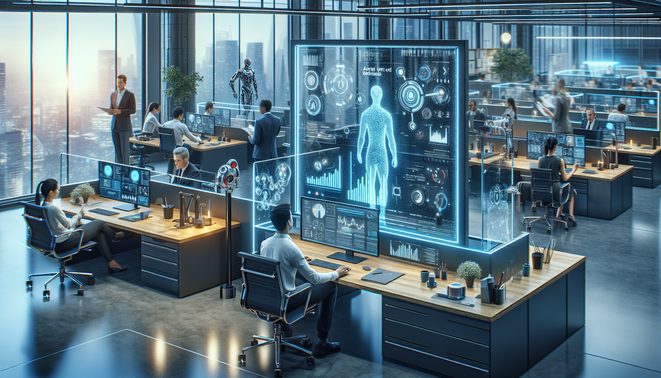
The verification economy has spawned roles that sound like they belong in a cyberpunk novel. AI Content Authenticators now work alongside traditional fact-checkers, using forensic tools to analyze media for signs of manipulation. Deepfake Detection Engineers develop algorithms that identify the subtle artifacts synthetic media leaves behind. Digital Forensics Analysts investigate questionable content, while Content Provenance Specialists maintain chain-of-custody for trusted media.
Perhaps most tellingly, organizations are creating positions like Synthetic Media Ethics Officer—professionals who establish guidelines for legitimate AI use while protecting against malicious applications. These roles blend technical expertise, ethical reasoning, and policy development in ways that traditional job categories never required.
One media literacy educator described the shift succinctly: “We’re teaching people to doubt their eyes, constructively.” It’s a strange inversion of traditional pedagogy, but increasingly necessary.
Transformed Roles
For every new job created, several existing ones are being fundamentally reimagined. Journalists must now function as part-time forensic analysts, applying technical tools to verify sources. Their workflows have expanded from traditional research and interviewing to include authentication protocols that would have seemed paranoid a decade ago.
Video editors increasingly spend time detecting manipulations rather than just creating content. Legal professionals handle cases where digital evidence must be authenticated or challenged. Social media managers monitor for synthetic impersonations of their brands. PR professionals develop rapid-response protocols for when deepfakes of their executives inevitably surface.
The transformation runs deeper than just added tasks. These roles now require an entirely different cognitive approach—what researchers call “constructive skepticism.” Professionals must balance the efficiency of trusting information with the necessity of verification, making judgment calls about when deeper investigation is warranted. This constant calibration of trust represents a fundamental shift in how knowledge work operates.
Displacement Concerns
The same technologies creating verification jobs are eliminating others. Voice actors face competition from AI synthesis systems that can replicate human speech with remarkable fidelity. Stock photography models see demand decline as AI-generated images flood the market. Translation and dubbing work increasingly goes to systems that can clone voices across languages. Some content moderation roles yield to automated detection systems.
The displacement isn’t yet catastrophic, but the trajectory concerns workforce analysts. Unlike previous automation waves that primarily affected routine manual labor, AI-generated media impacts creative professionals—workers who were supposed to be insulated from technological displacement. The psychological and economic adjustment required feels particularly acute for these communities.
The New Skills Landscape
Succeeding in this transformed environment requires an unusual combination of capabilities that traditional education systems aren’t yet producing at scale.
Technical Foundations
Workers don’t necessarily need to code neural networks, but understanding how generative AI functions has become baseline knowledge. Familiarity with digital forensics tools, basic data analysis, and authentication methods increasingly appears in job descriptions across industries. Computer vision concepts, audio analysis techniques, and cryptographic authentication all migrate from specialist domains into general professional requirements.
The Human Advantage
Paradoxically, as AI handles more content generation, distinctly human capabilities become more valuable. Critical thinking—the ability to evaluate information in context, spot logical inconsistencies, and identify missing corroboration—can’t be easily automated. Pattern recognition that draws on deep domain expertise outperforms algorithmic detection in ambiguous cases. Ethical reasoning about complex, unprecedented situations remains stubbornly human.
Communication skills take on new importance. Professionals must translate technical findings for non-expert audiences, explaining detection confidence scores to executives or judges. Collaboration across disciplinary boundaries—bringing together engineers, editors, lawyers, and ethicists—becomes standard practice rather than occasional necessity.
Preparing for Continuous Change
Perhaps the most crucial skill is adaptability itself. One industry observer noted: “The cost of truth verification is increasing exponentially.” As verification methods and generation techniques evolve in tandem, static knowledge quickly obsoletes. Workers must embrace continuous learning as a permanent condition rather than occasional professional development.
Educational pathways are emerging but remain fragmented. Specialized certificates in AI content verification appear at some universities. Digital forensics programs add media focus. Journalism schools update curricula to include technical literacy. Cybersecurity programs expand into content authenticity. Yet comprehensive interdisciplinary programs that integrate technology, media theory, ethics, and practical skills remain rare. Workers largely must assemble expertise from multiple sources while on the job.
Navigating the Path Forward
The transformation AI-generated media brings isn’t inherently positive or negative—it’s complex, creating genuine opportunities alongside serious challenges.
For individual workers, the imperative is clear: develop AI literacy now, even if it seems peripheral to your current role. Practice critical evaluation of media you consume. Understand verification methodologies relevant to your industry. Build expertise that bridges technical and human domains. Most importantly, cultivate adaptability and comfort with ongoing skill evolution.
Organizations should invest in employee training before crises emerge. Developing internal verification capabilities protects against both external manipulation and internal misuse. Creating dedicated roles around content authenticity signals cultural commitment to truth and transparency. Establishing clear ethical guidelines for AI use prevents problems before they start.
From a societal perspective, we’re witnessing something larger than a technological transition. We’re reimagining how communities establish shared truth in an environment where traditional evidentiary standards no longer suffice. The workers who thrive in this environment won’t just master new tools—they’ll help rebuild the infrastructure of trust that functioning societies require.
The verification economy represents more than job creation statistics. It’s a response to a fundamental challenge: maintaining authentic human communication in an age of synthetic perfection. The professionals building this new field are, in a very real sense, preserving something essential about how we connect, persuade, and understand each other.
That’s not just a job of the future—it’s work that matters.