The Robot Revolution: Preparing for Tomorrow’s Workforce
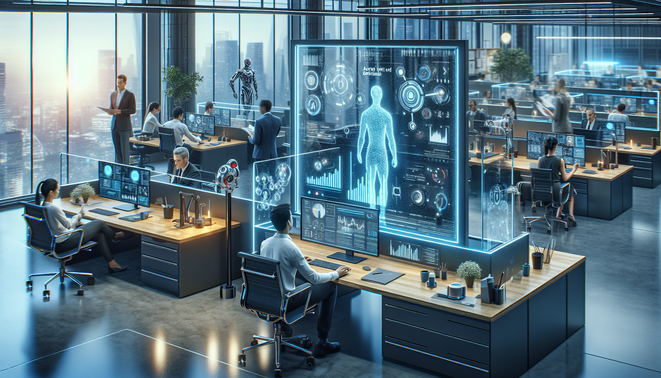
Picture a factory floor where humanoid robots work alongside human technicians, learning new tasks through observation and adapting to unexpected challenges in real-time. This isn’t science fiction—it’s happening now. Boston Dynamics and competitors are deploying AI-powered humanoid robots in manufacturing facilities across the globe, and analysts project the humanoid robot market will surge to $20 billion by 2030. The implications stretch far beyond the factory floor, signaling a fundamental restructuring of how we work, what skills we need, and who thrives in the emerging economy.
The conversation around robots and jobs typically devolves into binary thinking: either robots steal jobs, or they create opportunity. Reality is far more nuanced. We’re entering an era where the question isn’t whether automation will transform work, but rather how we’ll navigate the transition to ensure prosperity is broadly shared rather than concentrated among those who own the machines.
A New Species Enters the Workplace
Today’s humanoid robots represent a quantum leap from their predecessors. Unlike traditional industrial robots bolted to factory floors and programmed for single repetitive tasks, AI-powered humanoids navigate dynamic environments, manipulate diverse objects, and most remarkably, learn from experience. One researcher noted that tasks requiring 10,000 hours of robot training just years ago now take merely 100 hours—an exponential improvement curve that’s accelerating deployment timelines.
The technology converges several breakthroughs: computer vision that rivals human perception, reinforcement learning that enables autonomous problem-solving, and sophisticated motor control allowing dexterous manipulation. These capabilities make humanoids viable for the unstructured, variable work that characterizes most manufacturing and logistics operations.
Major manufacturers are moving beyond pilots to production deployment. BMW, Hyundai, and other automakers are testing humanoid robots for tasks ranging from parts assembly to quality inspection. The business case is compelling: robots work continuously without fatigue, handle dangerous tasks without risk, and deliver consistent precision. Companies report return-on-investment timelines of just two to three years, even at current price points of $150,000 to $250,000 per unit. As production scales and technology matures, costs could plummet to $25,000 to $50,000 within a decade, making humanoids economically viable for mid-sized manufacturers.
The timing isn’t coincidental. U.S. manufacturers face a projected shortage of 2.1 million workers by 2030, with 45 percent already turning down business due to insufficient staffing. In this context, robots aren’t simply displacing workers—they’re filling positions that would otherwise remain vacant. Japanese and Korean manufacturers pioneered this approach, deploying humanoids for night shifts and hazardous work that struggled to attract human workers.
The Great Reconfiguration: What Happens to Jobs
The employment impact defies simple categorization. Goldman Sachs estimates that 25 to 30 percent of current manufacturing and warehouse positions could be automated by humanoid robots within fifteen years. Jobs involving repetitive assembly, material handling, basic inspection, and packaging face the highest displacement risk. For context, that potentially affects two to three million American workers in manufacturing alone, with millions more in adjacent industries.
Yet the picture grows more complex upon closer examination. Countries with the highest robot density—South Korea, Singapore, and Japan—maintain near-full employment. How? Automation drives productivity gains that create economic growth, generating new categories of work even as specific roles disappear. As MIT scholar Andrew McAfee observes: “Every previous wave of automation has created more prosperity and more jobs.”
The crucial question becomes whether displaced workers can access newly created opportunities. Manufacturing executives report maintaining or increasing total headcount even while deploying robots, but the nature of available positions shifts dramatically. Traditional assembly line roles decline while demand surges for robot coordinators, maintenance technicians, and integration specialists.
Consider the emerging role of Robot Fleet Supervisor—a position that didn’t exist five years ago. These professionals monitor ten to twenty humanoid robots simultaneously, troubleshoot issues, prioritize tasks, and handle exceptions that exceed robot capabilities. The role requires understanding robot systems without deep engineering expertise, combining technical literacy with operational judgment. Early data suggests one supervisor per ten to fifteen robots, creating substantial demand as deployment scales.
Maintenance and repair positions are similarly transforming. Traditional manufacturing technicians focused on mechanical systems now need fluency in robotics, AI behavior, and software diagnostics. It’s mechatronics—the fusion of mechanical, electrical, and computational systems—with significantly higher skill requirements and typically higher compensation.
Entirely new job categories are emerging. Robot Training Specialists teach humanoids new tasks through demonstration, essentially serving as tutors for AI systems. Human-Robot Integration Designers reimagine factory workflows to optimize collaboration between human and machine workers. Robot Safety Officers ensure compliance and manage risks in increasingly automated environments. Industry projections suggest hundreds of thousands of such positions by 2035.
The challenging reality is that many workers displaced from repetitive roles lack clear pathways to these emerging opportunities. Geographic mismatches compound the problem—robot maintenance positions concentrate in different locations than the assembly jobs they replace. As one economist noted: “Automation creates more jobs than it destroys, but the transition period is painful and uneven.” That transition period could span decades.
The Skills That Matter Now
If one theme dominates conversations with industry leaders and workforce experts, it’s this: adaptability trumps specific technical knowledge. Technology evolves every twelve to eighteen months. Workers who thrive will be those capable of continuous learning rather than those who master a fixed skillset.
That said, certain technical competencies are becoming baseline requirements. Robotics literacy—understanding what robots can and cannot do, how to communicate with robotic systems, basic troubleshooting—is transitioning from specialized knowledge to general workplace skill. Community colleges and bootcamps are developing six to twelve month certificate programs covering these fundamentals.
Data literacy follows similar logic. Manufacturing increasingly runs on metrics generated by sensors, robots, and integrated systems. Workers at all levels need comfort interpreting dashboards, identifying anomalies, and making data-informed decisions. This doesn’t require becoming a data scientist, but does demand moving beyond pure intuition to evidence-based reasoning.
For specialized roles, mechatronics expertise commands premium compensation. The convergence of mechanical, electrical, and software systems means troubleshooting requires cross-disciplinary knowledge. Technical schools and apprenticeship programs are developing one to two year pathways, but current estimates suggest shortages of 400,000 to 600,000 qualified robotics technicians by 2030.
Yet technical skills tell only half the story. The capabilities robots struggle to replicate—and therefore the capabilities most valuable in humans—are precisely those dismissed as “soft skills.” Complex problem-solving in novel situations remains distinctly human territory. Robots excel at pattern recognition within trained domains but falter when confronting genuinely unexpected scenarios.
Collaboration and communication grow more critical, not less, in automated workplaces. Human-robot teams require coordination, as do the increasingly distributed and specialized roles that characterize modern manufacturing. Systems thinking—understanding how interventions ripple through complex processes—becomes essential when managing integrated operations.
Perhaps most importantly, the psychological capacity to embrace continuous change and uncertainty determines who adapts successfully. Workers who view technological disruption as threat and retreat into resistance face diminishing prospects. Those who approach it as opportunity and invest in ongoing skill development position themselves for emerging roles.
Educational institutions are struggling to keep pace. Traditional four-year degrees move too slowly for rapidly evolving skill requirements. The most promising models involve modular credentials, stackable certificates, and paid apprenticeships that allow learning while earning. Companies successfully navigating the transition invest three to five times more in worker training than those struggling, seeing 40 percent less turnover and 25 percent higher productivity as a result.
Navigating the Path Forward
The deployment of AI-powered humanoid robots in workplaces represents neither utopia nor apocalypse, but rather a complex transition demanding thoughtful navigation. The trajectory isn’t predetermined—policy choices, business strategies, and individual decisions will shape whether the benefits flow broadly or concentrate narrowly.
For workers, the imperative is clear: begin upskilling now, before displacement occurs. Waiting until your specific role faces automation severely constrains options. Investigate training programs, seek exposure to robotic systems, and cultivate adaptability as a core competency. The coming decade belongs to those who learn continuously.
Employers face a choice between extraction and investment. Short-term thinking might optimize for replacing workers with robots, but companies taking that approach often struggle with implementation, face community backlash, and lose institutional knowledge. Organizations that invest in retraining, involve workers in deployment decisions, and position robots as tools augmenting human capability consistently achieve better outcomes.
Policymakers must grapple with ensuring transitions don’t devastate communities. This likely requires robust retraining programs with income support, portability of benefits beyond traditional employment, and potentially novel approaches like portable benefits or universal basic income. The countries and regions that figure this out will thrive; those that don’t risk social instability and wasted human potential.
The fundamental question isn’t whether humanoid robots will transform work—they will. It’s whether that transformation creates broadly shared prosperity or concentrates wealth and opportunity among robot owners while leaving workers behind. As one Boston Dynamics executive noted: “Every robot we deploy requires humans for training, maintenance, and exception handling.” The challenge is ensuring pathways exist for workers to access those roles.
History offers both comfort and caution. Previous automation waves ultimately created more opportunity than they destroyed, but the transitions proved brutal for those caught on the wrong side. With foresight, investment, and inclusive policies, we can navigate this transition better than our predecessors navigated theirs. The robots are coming—the question is whether we’ll be ready.