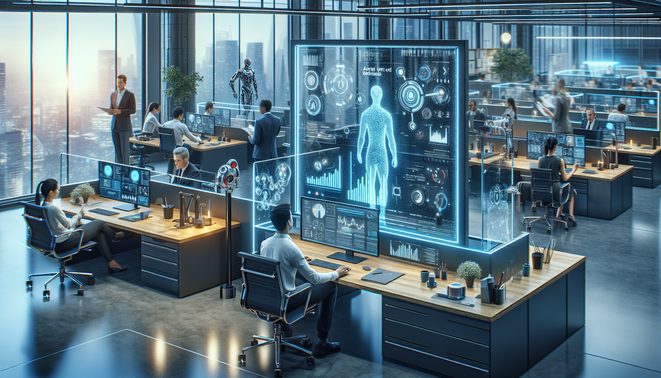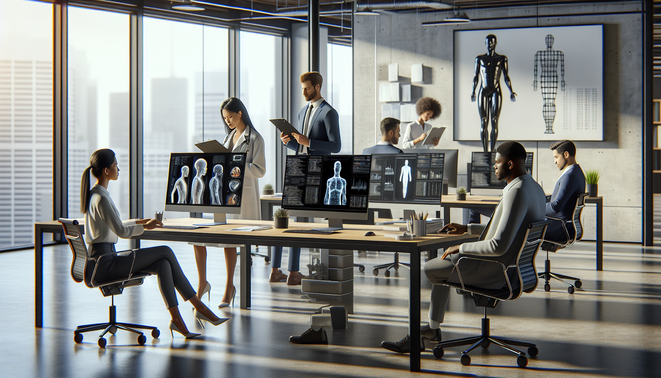
A marketing coordinator in Kansas City just produced a 30-second product video that would have cost her company $15,000 six months ago. She did it in two hours on her desktop computer, using AI tools running locally on a gaming graphics card. Meanwhile, a senior cinematographer in Los Angeles with twenty years of experience is reimagining his entire career, learning to direct algorithms instead of camera operators. Both are navigating the same seismic shift: AI video generation has arrived, and it’s not coming from the cloud—it’s running on the computer in front of you.
This isn’t a distant future scenario. Tools like ComfyUI, powered by NVIDIA RTX GPUs, are already enabling anyone with a decent computer to generate professional-quality video content locally. What once required expensive studios, specialized equipment, and years of technical training can now be accomplished through node-based workflows and text prompts. We’re witnessing something rare: a technology that simultaneously democratizes access and disrupts livelihoods, often in the same breath. The question isn’t whether this will reshape creative work—it already is. The question is who thrives in this new landscape and who gets left behind.
The Great Unbundling of Video Production
The transformation happening in video production mirrors what desktop publishing did to graphic design in the 1980s, but compressed into a much shorter timeframe. Advertising agencies report production timelines shrinking by 40 to 60 percent. Studios are saving between $50,000 and $200,000 per commercial by integrating AI-assisted workflows into their pre-production process. These aren’t marginal improvements—they’re fundamental restructurings of how creative work gets done.
What makes this wave different is where the processing happens. Earlier AI video tools required expensive cloud subscriptions and raised privacy concerns for proprietary content. Local processing changes the economics entirely. A production company that might have spent $100,000 annually on cloud rendering can now invest $2,000 in hardware and own the infrastructure outright. This shift is already reshaping competitive dynamics, allowing smaller studios to bid on projects previously reserved for larger firms with deeper pockets.
The gaming and advertising sectors are experiencing the most immediate impact. Independent game developers can now produce cinematic trailers that compete visually with AAA studio releases. Corporate training departments are generating custom instructional videos without hiring production companies. Even individual content creators are producing material that would have required a full crew just two years ago. The market for AI video generation tools is projected to reach $4.7 billion by 2028, and that figure may prove conservative given the accelerating adoption rates.
But the technology’s reach extends beyond obvious creative industries. Real estate firms are generating property tour videos. Educational institutions are creating customized learning content at scale. Healthcare companies are producing patient education materials in multiple languages without reshooting. Each of these applications represents work that previously employed human videographers, editors, and motion graphics artists.
The Jobs Equation: Creation, Transformation, and Displacement
The employment picture emerging from this shift is complex and defies simple narratives. Yes, jobs are being displaced—particularly entry-level production roles and template-based work. Research suggests that 22 percent of video production tasks are now partially automatable. Stock footage creation, basic corporate video production, and routine motion graphics work are experiencing downward pressure on both volume and rates.
Yet simultaneously, entirely new roles are emerging. AI workflow designers who build and optimize complex node-based generation pipelines are commanding premium rates. Prompt engineers specializing in video generation are becoming essential team members at creative agencies. Custom model trainers who can fine-tune AI systems for specific visual styles or brand guidelines are in high demand. These aren’t rebranded versions of existing jobs—they’re genuinely new skillsets that didn’t exist three years ago.
The middle ground is where the real story unfolds—in jobs being fundamentally transformed rather than created or destroyed. Consider the motion graphics designer: frame-by-frame animation is increasingly AI-assisted, but the ability to art-direct those AI outputs, to refine and curate them into coherent visual narratives, becomes more valuable. As one creative director noted, “We’re giving them superpowers to prototype faster than ever.” The job isn’t gone; it’s metamorphosed into something requiring both traditional aesthetic judgment and technical fluency with AI systems.
Video editors are experiencing a similar evolution. Technical editing skills—cutting, transitions, color correction—are being augmented or automated. But storytelling sense, pacing intuition, and the ability to recognize what makes a compelling narrative are appreciating in value. The editor who can iterate through five concept directions in the time it previously took to execute one has a multiplied impact. Organizations investing in upskilling their creative teams retain 85 percent of staff compared to 60 percent retention at companies treating AI as a replacement strategy rather than an augmentation tool.
The displacement isn’t evenly distributed, however. Entry-level positions—traditionally the pathway into the industry—are contracting. Junior roles that once provided hands-on learning opportunities are being automated or eliminated. This creates a concerning gap: how do you develop senior-level creative judgment without the foundational experiences that built that expertise? As one filmmaker cautioned, “When anyone can generate a video in minutes, what happens to craft mastery?”
There’s also a bifurcation emerging between routine and strategic work. Templated content, generic B-roll, and standardized corporate videos are racing toward commoditization. Meanwhile, demand for creative directors, strategic planners, and specialists who can deliver unique vision is intensifying. The middle is indeed hollowing out—work is polarizing toward either automated execution or high-level strategic creativity, with less space for the craftsperson who excelled at skilled execution.
The New Literacy: Skills for the AI-Augmented Creator
If there’s a silver lining in this disruption, it’s that the essential skills for thriving in an AI-augmented creative environment are learnable—but they require intentional development and a willingness to embrace hybrid expertise.
Technical proficiency with AI tools is non-negotiable. This doesn’t mean becoming a machine learning engineer, but it does mean understanding tools like ComfyUI, grasping how different models produce different results, and developing prompt engineering skills specific to video generation. It means knowing when to regenerate an AI output versus manually refine it. It means understanding hardware limitations and optimization strategies. Many creative professionals are, by some estimates, 18 to 24 months behind where they need to be in AI literacy, and that gap widens with each passing quarter.
But technical skills alone won’t differentiate you in a market where AI handles execution. The human skills—the ones that remain stubbornly difficult to automate—are appreciating in value faster than technical capabilities. Creative direction is the most obvious: the ability to envision what should exist before it does, to set a strategic creative vision that AI tools then help execute. Storytelling fundamentals matter more, not less, when generating content becomes effortless. Anyone can make a video, but not everyone can make one that resonates emotionally or serves a strategic communication goal.
Aesthetic judgment and curatorial skills are becoming premium capabilities. AI can generate a hundred variations; the human who recognizes which three are worth pursuing provides enormous value. Cultural awareness, understanding context and subtext, knowing what will resonate with specific audiences—these remain distinctly human domains. The art director who can guide an AI system toward a specific vision, then refine outputs with taste and cultural intelligence, becomes more valuable as the tools become more powerful.
Adaptability itself is perhaps the meta-skill. The AI landscape is evolving rapidly—models that seemed cutting-edge six months ago are superseded. Workflow best practices are constantly being rewritten. As one consultant advised, “The future belongs to professionals who can direct AI tools, not compete with them.” This requires a mindset shift for many: from protecting existing skillsets to continuously acquiring new ones, from viewing AI as threat to embracing it as creative leverage.
Educational pathways are scrambling to keep pace. Film schools are adding AI-assisted production courses. Interdisciplinary programs in computational creativity are emerging. Professional bootcamps for AI creative technologists are proliferating. But the most effective learning is often happening in online communities—Discord servers, Reddit forums, YouTube tutorials—where practitioners share workflows and troubleshoot in real time. Organizations seeing the best results dedicate 15 to 20 percent of creative staff time to continuous upskilling, treating AI literacy as an ongoing practice rather than a one-time training event.
Navigating the Transition: A Balanced Path Forward
We’re early enough in this transition that the ultimate shape of the creative industry remains genuinely uncertain. Historical precedent suggests reasons for both optimism and concern. Desktop publishing eliminated typesetting jobs but massively expanded the graphic design industry overall. Digital photography destroyed the film processing business but created an explosion in photography’s accessibility and applications. Whether AI video generation follows a similar pattern—short-term displacement, long-term expansion—depends significantly on how stakeholders navigate the next few years.
For individual creators and creative professionals, the imperative is clear: engage with these tools now, not later. Build fluency while the field is still being defined. Experiment with hybrid workflows that combine traditional craft with AI augmentation. Develop a portfolio that demonstrates not just creative vision but also technical adaptability. Specialize in the intersection of domains—be the cinematographer who understands AI generation, the animator who can direct algorithms, the strategist who can operationalize creative vision through AI workflows.
For organizations and creative businesses, the winning strategy appears to be augmentation over replacement. Companies that invest in upskilling existing teams, that treat AI as amplifying human creativity rather than substituting for it, are seeing productivity gains while retaining institutional knowledge and team cohesion. The short-term cost savings from eliminating positions are often offset by loss of creative judgment, cultural continuity, and strategic insight.
For educators and policymakers, the challenge is ensuring accessible pathways into creative careers even as traditional entry points contract. This might mean rethinking apprenticeship models, creating bridge programs that combine AI technical training with creative fundamentals, or ensuring that the benefits of productivity gains are shared broadly rather than concentrated among capital owners and elite technologists.
The video creator’s paradox—that democratizing content creation might simultaneously devalue creative work—doesn’t have a predetermined resolution. The same tools enabling a marketing coordinator to produce her own videos are also enabling that Los Angeles cinematographer to tackle projects that would have been impossible before. Which effect dominates depends on how we collectively navigate this moment. The technology is here. The tools are accessible. The question now is whether we can steer this transition toward broadly shared prosperity or whether we’ll see creative work follow the pattern of many disrupted industries: enormous gains captured by a few, significant displacement experienced by many.
What’s certain is that the creative professionals who thrive in the next decade won’t be those who resist these tools or those who are replaced by them. They’ll be the ones who master the hybrid skillset—combining timeless creative judgment with cutting-edge technical fluency, directing algorithms as deftly as they once directed cameras, and maintaining their essential humanity even as the tools of creation become increasingly machine-powered.