A pharmaceutical researcher discovers a promising drug compound in three months—a process that traditionally took three years. A junior software engineer ships production-quality code on her first day, guided by an AI pair programmer. A small startup competes with industry giants because AI tools have demolished the barriers to sophisticated product design.
These aren’t future scenarios. They’re happening right now, and they’re fundamentally changing not just what we make, but how we learn to make things in the first place.
The conversation about AI and jobs often fixates on a binary question: Will machines replace us? But there’s a far more nuanced transformation underway. We’re entering an era where the innovation process itself—humanity’s core competitive advantage—is being reimagined through human-AI collaboration. The question isn’t whether AI will take our jobs, but whether it will change what it means to be good at them.
The Speed of Change Is Already Here
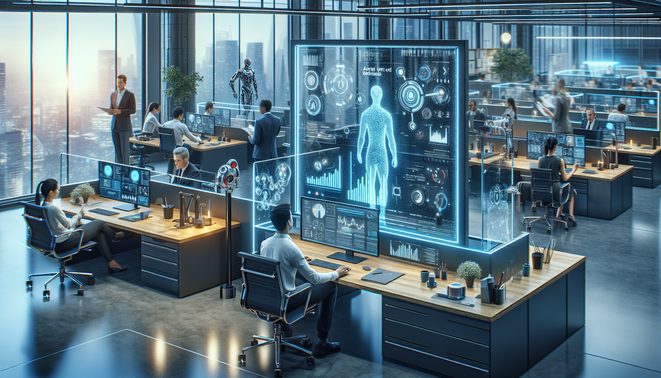
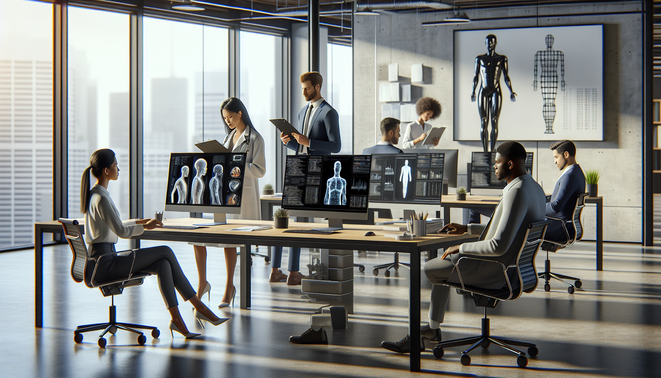
Walk into any modern R&D lab, design studio, or tech company, and you’ll find AI systems working alongside humans in ways that seemed like science fiction just five years ago. AlphaFold has cracked protein structure prediction, a fifty-year scientific challenge. Generative AI tools are producing sophisticated marketing campaigns, architectural designs, and financial models in minutes rather than weeks.
The numbers tell a striking story. Over half of organizations now deploy AI systems, up from just twenty percent in 2017. These tools are compressing innovation cycles by thirty to fifty percent across industries. Drug discovery phases that consumed years now take months. Product development sprints that required large teams can be executed by small groups wielding the right AI tools.
But here’s what makes this different from previous technological shifts: AI isn’t just automating routine tasks. It’s entering the creative and analytical domains we thought were uniquely human. It’s not replacing the assembly line worker—it’s sitting next to the scientist, the designer, the strategist.
Pharmaceuticals and biotechnology are experiencing this most dramatically. AI systems now analyze millions of molecular combinations to identify drug candidates, guide clinical trial design, and even predict patient responses to treatments. Software development has been transformed by AI coding assistants that understand context, suggest solutions, and catch errors in real-time. Creative industries—from architecture to advertising—are grappling with tools that can generate hundreds of design variations instantly.
The financial services sector is reinventing risk modeling and investment strategy through AI systems that process market signals no human could track. Manufacturing is optimizing everything from supply chains to product design through AI that can simulate thousands of scenarios simultaneously.
The Great Reconfiguration
This acceleration creates what economists are calling a “great reconfiguration” of the job market. The World Economic Forum projects that by 2027, roughly eighty-three million jobs will be displaced while sixty-nine million new roles emerge. That’s a net loss of fourteen million positions, but the numbers alone miss the deeper story.
The real transformation is happening within existing roles. Consider the research scientist who once spent months conducting literature reviews and designing experiments manually. Now, AI handles data pattern recognition and hypothesis generation, but this doesn’t make the scientist obsolete. Instead, as one observer noted, the concern is not that AI will replace scientists, but that it will change what it means to be a scientist.
This gets at the heart of the augmentation versus automation debate. When McKinsey analysts examined generative AI’s impact, they found it could automate sixty to seventy percent of time spent on current work activities. Yet their conclusion wasn’t massive unemployment, but rather profound role evolution. Knowledge workers—researchers, analysts, designers, writers—will see their jobs augmented rather than eliminated, at least in the near term.
The challenge is that “augmented” doesn’t mean “unchanged.” A junior engineer who learns design using AI tools follows a fundamentally different development path than one who struggled through manual calculations and iterations. The muscle memory of innovation—learning through doing, building intuition through failure—looks different when AI handles the first several iterations.
New roles are emerging rapidly. Companies now hire AI ethics officers to ensure responsible innovation, prompt engineers who optimize human-AI interaction, and human-AI collaboration designers who structure workflows around combined strengths. These didn’t exist five years ago. Demand for AI and machine learning specialists is projected to grow forty percent by 2027, with data scientists and analysts not far behind.
Meanwhile, certain roles face genuine disruption. Entry-level positions that primarily build foundational skills through routine work—research assistants conducting literature reviews, junior designers creating initial concept variations, analysts preparing standard reports—are most vulnerable. Not because these tasks are unimportant, but because AI systems can now execute them rapidly and cheaply.
As one industry leader put it: “AI should be about amplifying human ingenuity, not replacing it.” But economic incentives don’t always align with that vision. Research from MIT economists suggests that forty to seventy percent of automation investments aim to replace workers rather than augment them, revealing a gap between the optimistic vision and business reality.
The New Essential Skills
If AI is transforming how we innovate, what capabilities will matter most? The answer is surprisingly dual-natured: some technical, some deeply human.
On the technical side, AI literacy has become as fundamental as computer literacy was in the 1990s. This doesn’t mean everyone needs to code neural networks, but professionals across fields need to understand how AI systems work, what they can and cannot do, and how to integrate them effectively. Data fluency—the ability to interpret AI-generated insights and validate outputs—is becoming essential across industries. Prompt engineering, the skill of communicating effectively with AI systems, has emerged as its own discipline.
But here’s the paradox: as AI handles more technical heavy-lifting, uniquely human capabilities become more valuable, not less. Critical thinking—the ability to evaluate AI suggestions and identify flawed reasoning—matters more when we’re flooded with machine-generated options. Creative problem-framing, the skill of defining challenges in productive ways, becomes crucial when AI can generate solutions but not determine which problems are worth solving.
Ethical reasoning gains importance as AI-driven innovations raise complex moral questions about privacy, fairness, and human autonomy. Systems thinking—understanding intricate interactions and unintended consequences—provides the contextual judgment that AI systems typically lack. Emotional intelligence enables effective collaboration in human-AI teams where technology handles analysis but humans navigate relationships and organizational dynamics.
Perhaps most important is what experts call “continuous learning agility”—the meta-skill of adapting rapidly as AI capabilities evolve. As one researcher emphasized, “We need to think carefully about which cognitive skills we want to preserve.” This isn’t just philosophical; it’s practical. When AI handles routine calculations, we don’t want humanity to lose the mathematical intuition that enables breakthrough thinking.
The education gap here is stark. Seventy percent of workers report feeling unprepared for AI integration, yet only thirty-five percent have access to training. This presents both a challenge and an opportunity. Forward-thinking organizations are building “AI fluency” programs across their workforce, not just for technical teams. Universities are integrating AI collaboration into curricula across majors, teaching students to work effectively with AI tools while maintaining critical thinking.
The shift is from “learning to know” to “learning to learn with AI”—from static expertise to dynamic capability building. The most valuable professionals will likely be “T-shaped”: deep expertise in a domain combined with broad AI collaboration skills.
Navigating the Transition
So where does this leave us? The honest answer is: in a period of profound uncertainty with both genuine opportunities and serious risks.
The optimistic case is compelling. AI could democratize innovation, allowing more diverse participants to solve complex problems. It could free humans from routine work for more meaningful creative challenges. It might accelerate solutions to pressing problems from climate change to disease. The companies and individuals who master human-AI collaboration will find unprecedented capabilities at their fingertips.
But the risks are equally real. Without intentional effort, AI could concentrate power among organizations that can afford cutting-edge systems. It could create a generation of workers who operate AI tools without understanding the underlying principles, vulnerable when those tools change. The transition could happen faster than our education systems and social safety nets can adapt, creating painful dislocations.
The path forward requires action from multiple stakeholders. Workers need to embrace continuous learning, focusing on capabilities that complement rather than compete with AI. Companies should invest in augmentation over pure automation, recognizing that human capability development drives long-term value. Educational institutions must reimagine curricula around human-AI collaboration while preserving fundamental cognitive skills. Policymakers need to create frameworks that encourage AI deployment benefiting broad populations rather than narrow interests.
Perhaps most importantly, we need to approach this transition with both ambition and humility. Ambition to seize the genuine opportunities AI presents for solving hard problems and creating meaningful work. Humility to acknowledge uncertainty and preserve the human elements of curiosity, creativity, and critical thinking that have always driven our greatest innovations.
The future of work isn’t about humans versus machines. It’s about intentionally designing a future where both contribute their strengths to innovation that neither could achieve alone. That future is being built right now, in the daily decisions of how we develop AI tools, train workers, and structure organizations. The innovation paradox—AI helping us innovate while potentially reducing our innovation muscles—isn’t predetermined. It’s a choice we’re making collectively, one implementation at a time.