AI Won’t Steal Your Job—But It Will Transform It
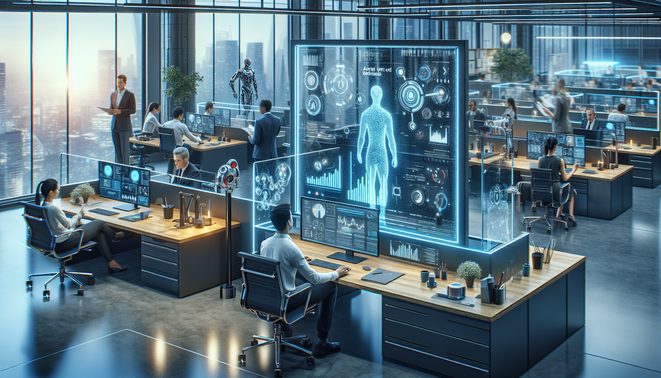
In a manufacturing plant outside Detroit, a quality control inspector named Maria spends her mornings differently than she did three years ago. Instead of manually examining parts under harsh fluorescent lights, she now supervises an AI vision system that detects microscopic defects she could never spot with the naked eye. Her job wasn’t eliminated—it evolved. She’s now responsible for training the AI, investigating anomalies it flags, and making judgment calls the algorithm can’t handle. Maria’s story isn’t unique. Across industries, we’re witnessing not a job apocalypse, but a fundamental reconfiguration of work itself.
The conversation about AI and employment has been dominated by fear—headlines warning of mass unemployment and obsolete workers. But the reality emerging from today’s workplaces tells a more nuanced story. Advanced AI systems are certainly disrupting traditional roles, but they’re also creating entirely new categories of work, elevating human skills that machines can’t replicate, and forcing us to reconsider what we actually value in human labor.
The Transformation Underway
Today’s enterprise AI systems have capabilities that seemed like science fiction just five years ago. They can analyze legal documents faster than teams of paralegals, generate marketing copy that converts customers, diagnose medical conditions from imaging scans, and predict equipment failures before they happen. These aren’t experimental prototypes—they’re deployed systems generating measurable business value.
The professional services sector is experiencing the most immediate transformation. McKinsey research suggests that generative AI could automate up to 30% of current work hours across the economy by 2030, with knowledge workers facing the most significant changes. Legal teams use AI to conduct document review that once required armies of junior associates. Financial analysts rely on machine learning models to identify patterns in market data no human could process. Customer service departments deploy conversational AI that handles routine inquiries, escalating only complex issues to human agents.
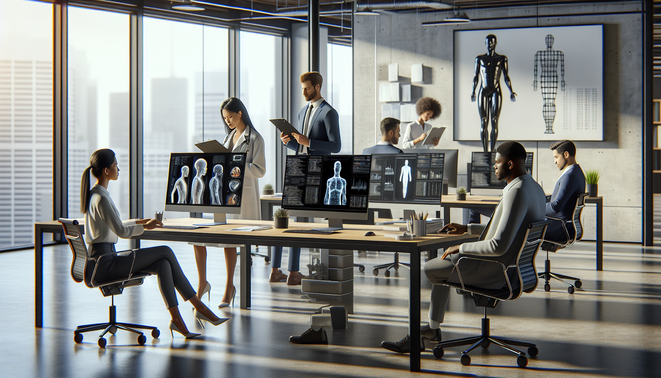
But here’s what the apocalyptic headlines miss: these same companies are hiring. They’re looking for AI trainers, prompt engineers, algorithm auditors, and human-in-the-loop specialists—roles that barely existed three years ago. A major healthcare system that implemented AI diagnostic tools didn’t fire radiologists; they reassigned them to complex cases, patient consultation, and overseeing AI accuracy. Their patient throughput increased 40% while diagnostic errors decreased.
The Job Market Reconfiguration
The displacement versus creation debate misses the point. Most jobs aren’t being eliminated or created—they’re being fundamentally redesigned. A software developer’s role increasingly involves working with AI coding assistants rather than writing every line from scratch. A graphic designer’s workflow now includes AI-generated initial concepts that they refine and customize. An HR professional uses AI to screen resumes but focuses their human judgment on assessing cultural fit and growth potential.
This shift creates what researchers call the “augmentation advantage.” Workers who effectively leverage AI tools are dramatically outperforming those who don’t. A Stanford study found that customer service agents using AI assistance resolved 14% more customer issues per hour and experienced significantly higher job satisfaction. The technology didn’t replace them—it made them better at the parts of their job they actually value.
However, the transition isn’t painless. Routine cognitive tasks—data entry, basic analysis, standard document creation—are increasingly automated. The World Economic Forum estimates that 85 million jobs may be displaced by automation by 2025, while 97 million new roles may emerge. That’s not a comfortable transition for the millions caught in the gap. Workers whose entire skill set centers on tasks AI can perform face genuine economic disruption.
The jobs being created tend to cluster in several categories. There are AI-adjacent roles—machine learning engineers, data scientists, AI ethicists—that directly build and govern these systems. There are AI-enhanced positions where human workers use AI tools to dramatically increase their productivity. And there are distinctly human roles where AI’s limitations make human judgment, creativity, or emotional intelligence irreplaceable. A hospice nurse, a creative director, a strategic consultant—these roles involve complexity, ambiguity, and human connection that current AI cannot replicate.
As AI researcher Fei-Fei Li observed: “AI will amplify human ingenuity, not replace it.” But that amplification requires workers to develop new competencies.
Skills for the AI Era
The skills gap isn’t primarily technical—it’s adaptive. Yes, understanding how AI works provides advantages. Workers who grasp basic concepts like training data, model limitations, and algorithmic bias can use these tools more effectively and critically. Some coding literacy helps. Familiarity with data analysis platforms matters in many roles.
But the truly differentiating skills are human. As routine cognitive work gets automated, the premium shifts to capabilities machines struggle with. Complex problem-solving that requires integrating disparate information sources and navigating ambiguity. Creative thinking that generates novel solutions rather than optimizing existing approaches. Emotional intelligence that builds relationships, navigates office politics, and manages teams. Critical thinking that questions assumptions, identifies AI errors, and knows when to override algorithmic recommendations.
Communication skills become more valuable, not less. If AI can generate a first draft of anything, the ability to refine that draft, tailor it to specific audiences, and inject authentic voice and perspective becomes the differentiator. Strategic thinking—understanding broader business context and making decisions that balance competing priorities—remains firmly in human territory.
Perhaps most importantly, workers need meta-learning skills: the ability to continuously acquire new competencies as technology evolves. The half-life of technical skills is shrinking. Workers who can quickly master new tools, adapt to changing workflows, and remain comfortable with ongoing disruption will thrive.
Educational institutions are struggling to keep pace. Traditional four-year degrees still focus heavily on knowledge transmission rather than adaptive capability. Forward-thinking programs are integrating AI literacy across disciplines, emphasizing project-based learning, and teaching students to work effectively alongside AI tools. Companies are increasingly investing in internal reskilling programs, recognizing that hiring for tomorrow’s skills means developing today’s employees.
The Path Forward
The AI transformation of work is neither utopian nor dystopian—it’s complicated. We’re heading toward a labor market that offers extraordinary opportunities for workers who can adapt, while creating genuine hardship for those who can’t or don’t have access to reskilling pathways.
For workers, the imperative is clear: embrace continuous learning, develop AI literacy, and double down on distinctly human skills. Experiment with AI tools in your current role. Understand what they do well and where they fail. Position yourself as someone who leverages technology rather than competes with it.
For employers, investment in workforce development isn’t charitable—it’s strategic. The companies that will dominate their industries are those building cultures of continuous learning, providing accessible reskilling programs, and reimagining roles around human-AI collaboration rather than simple automation.
For policymakers and educators, the challenge is ensuring this transition doesn’t exacerbate inequality. Access to education, reskilling programs, and the time and resources to adapt shouldn’t depend on existing privilege. Social safety nets need reimagining for an era of more frequent career transitions.
The future of work isn’t humans versus machines. It’s humans and machines, together, doing things neither could accomplish alone. That future is already here—the only question is whether we’ll manage the transition with wisdom and equity, or allow disruption to deepen existing divides. The technology is advancing regardless. How we respond will determine whether AI makes work more meaningful, creative, and human—or simply more precarious.