AI Agents Are Reshaping Social Media Work—Here’s What’s Next
Mark Zuckerberg recently made a startling prediction: AI agents will soon outnumber human users on social platforms. Not just assist humans—outnumber them. If that sounds like science fiction, consider that Meta’s AI assistant already has over 500 million monthly active users, and the company is investing more than $30 billion in AI infrastructure this year alone. We’re witnessing a fundamental transformation of social media from human-to-human interaction spaces into ecosystems where AI agents create content, manage brands, engage audiences, and perform tasks autonomously. This isn’t a distant future scenario—it’s unfolding right now, and it’s forcing a critical question for millions of workers: what happens to jobs when AI becomes a primary actor rather than just a tool in digital spaces?
The AI Agent Revolution in Social Media
Today’s AI agents go far beyond simple chatbots. Meta’s AI Studio now allows anyone to create custom AI agents that interact with users, answer questions, and maintain ongoing conversations across Instagram, Messenger, and WhatsApp. The company has already launched over 28 AI characters, some voiced by celebrities, capable of engaging users in ways that blur the line between human and machine interaction.
But the transformation extends well beyond Meta. Virtual influencers—AI-generated personas with distinct personalities and appearances—are securing brand partnerships and building massive followings. The AI influencer market alone is projected to reach $40 billion by 2030, according to recent industry forecasts. These aren’t novelty accounts; they’re sophisticated marketing tools offering brands 24/7 availability, perfectly controlled messaging, and engagement rates that rival their human counterparts.
For businesses, the value proposition is compelling. AI agents can manage customer service inquiries around the clock, create and schedule content, respond to comments, and even adapt their communication style based on audience data—all without breaks, vacation time, or salary negotiations. Digital marketing agencies report that AI-powered social media management can deliver productivity improvements of two to three times over traditional approaches, while dramatically reducing operational costs.
The Great Reconfiguration: What Happens to Human Workers?
The employment impact of this AI agent revolution is complex, creating a simultaneous wave of job displacement, transformation, and creation that’s leaving many workers uncertain about their future.
Entry-level social media positions are contracting rapidly. Tasks that once occupied junior social media managers—routine posting, basic engagement responses, simple content scheduling—are increasingly handled by AI systems. Content moderation, once requiring armies of human reviewers, is being automated at scale. Customer service representatives managing social channels for routine FAQs are being replaced by AI agents that never sleep and never lose patience.
McKinsey research suggests that approximately 30% of hours currently worked in social media and digital marketing could be automated by AI agents by 2030. For workers in these roles, particularly those focused on execution rather than strategy, the pressure is mounting.
Yet the story isn’t simply one of displacement. Many roles are being fundamentally transformed rather than eliminated. Senior social media strategists are shifting from hands-on execution to AI system oversight, focusing on high-level strategy while AI handles implementation. Community managers are moving away from responding to every comment and toward managing complex situations, crisis communications, and building authentic human connections where they matter most. As AI researcher Ethan Mollick notes, we’re moving from asking “can AI do your job?” to “how do you work with AI to multiply your output?”
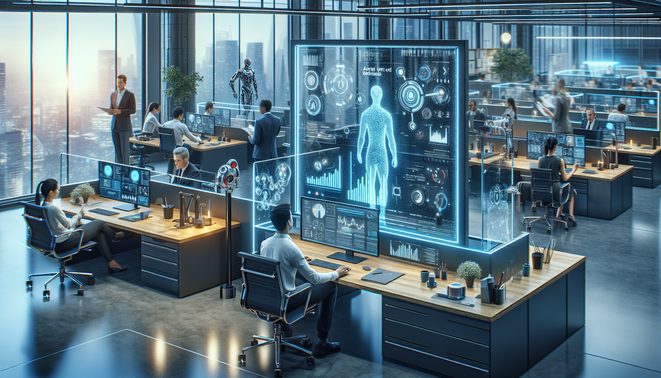
Meanwhile, entirely new job categories are emerging. Companies are hiring AI agent designers who create and train social media AI personalities, prompt engineers who optimize AI interactions for specific platforms and audiences, and AI ethics officers who ensure responsible deployment. Synthetic media specialists manage virtual influencers, while human-AI collaboration managers orchestrate workflows that blend algorithmic efficiency with human judgment. These roles didn’t exist three years ago; now they’re commanding premium salaries and growing rapidly.
The crucial distinction is this: jobs requiring routine execution are at risk, while roles demanding strategic thinking, ethical judgment, creative innovation, and authentic human connection are becoming more valuable—and often better compensated.
Skills That Matter in the AI Era
For workers navigating this transformation, the skills gap isn’t just technical—it’s conceptual. Success requires understanding not only how to use AI tools but when, why, and whether they should be deployed.
On the technical side, AI literacy has become non-negotiable. This doesn’t mean learning to code neural networks; it means understanding AI capabilities and limitations, knowing how to effectively prompt and direct AI systems, and interpreting AI performance metrics. Prompt engineering—the art of communicating effectively with AI to generate optimal outputs—is transitioning from a niche skill to a baseline expectation for social media professionals. Data analysis skills are increasingly important for evaluating whether AI or human-generated content performs better for specific audiences and objectives.
Paradoxically, as AI handles more technical execution, uniquely human skills are commanding a premium. Emotional intelligence and authentic empathy are differentiators when users can easily access AI for information but crave genuine human connection. Creative strategy—the high-level vision that directs what AI systems should create—requires cultural insight, trend prediction, and innovative thinking that current AI cannot replicate. Ethical judgment becomes critical when deciding how AI should represent brands, what level of AI disclosure is appropriate, and when human intervention is necessary.
The workers thriving in this new landscape are those combining technical fluency with distinctly human capabilities. They understand AI well enough to leverage its power but maintain the judgment to know when human touch is irreplaceable. Educational institutions are responding with hybrid programs blending marketing and communications training with AI fundamentals, while professional development courses offer rapid upskilling for existing practitioners.
The timeline for adaptation is compressed. Unlike previous technological transitions that unfolded over decades, AI capabilities are advancing on a timeline measured in months. As AI pioneer Andrew Ng observes, “the jobs won’t disappear—they’ll evolve. The question is whether we can retrain people fast enough.”
The Path Forward: Adaptation, Not Resistance
The integration of AI agents into social media work presents a critical choice point. Workers can resist this transformation, viewing AI as a threat to be avoided. Or they can proactively adapt, treating AI as a powerful tool to orchestrate rather than a competitor to fear.
The evidence increasingly supports the latter approach. Early adopters of AI tools are demonstrating significant competitive advantages, producing more content, engaging broader audiences, and delivering better results for clients and employers. The workers being displaced are primarily those trying to compete with AI on tasks AI does well—routine execution, 24/7 availability, perfect consistency. The workers thriving are those focusing on what humans do uniquely well while letting AI handle the rest.
For individual workers, this means embracing AI experimentation now, developing both technical skills and the human capabilities AI cannot replicate, and cultivating adaptability as a core competency. For employers, it requires thoughtful workforce development, investing in training rather than simply replacing workers with AI, and creating roles that blend human and AI capabilities strategically. For policymakers, the imperative is supporting workers through this transition with education funding, retraining programs, and possibly more innovative interventions as the pace of change accelerates.
The reality is that AI agents in social media are just the beginning. This same pattern—AI moving from tool to autonomous actor—is emerging across customer service, sales, healthcare, and education. The workers who successfully navigate this initial wave will be better positioned for the transformations ahead.
There are legitimate concerns: the speed of change may outpace adaptation capacity for many workers; benefits may accrue disproportionately to those with resources for retraining; the psychological impact of competing with AI is real and challenging. These concerns deserve serious attention and policy response.
Yet there’s also reason for measured optimism. Throughout history, technology has consistently created more jobs than it destroys, though often different jobs requiring different skills. The demand for authentic human connection may actually intensify in AI-saturated environments. The creative possibilities of human-AI collaboration are genuinely exciting for those positioned to explore them.
The future of work in social media—and increasingly across the knowledge economy—belongs to those who can orchestrate AI agents effectively while providing irreplaceable human value. That future is not waiting politely for permission to arrive. It’s already here, unfolding in real-time across platforms with billions of users. The question is not whether to adapt, but how quickly and how thoughtfully we can navigate the transformation already underway.