The Manufacturing Revolution: AI’s Surprising Job Creation Story
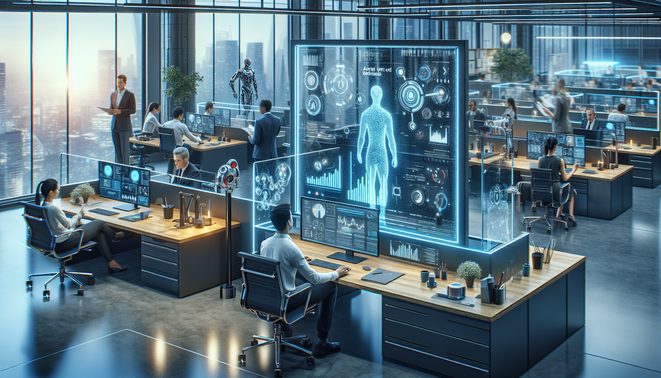
Picture a factory floor where robots and humans work side by side, where machine learning algorithms predict equipment failures before they happen, and where a quality control inspector monitors AI-powered systems instead of manually examining parts. This isn’t science fiction—it’s the reality unfolding in manufacturing facilities across the country right now. And contrary to the dystopian headlines, this transformation isn’t eliminating jobs as much as it’s fundamentally reimagining what manufacturing work looks like.
The numbers tell a surprising story: while 85 million jobs may be displaced globally by 2030 due to automation and AI, approximately 97 million new roles are expected to emerge in their place. In manufacturing specifically, we’re witnessing not a job apocalypse, but a massive workforce evolution that demands our attention—and preparation.
From Assembly Lines to Intelligent Systems
Today’s AI-powered manufacturing capabilities would have seemed impossible just a decade ago. Computer vision systems inspect products with superhuman accuracy, catching defects invisible to the naked eye. Machine learning algorithms optimize production schedules in real-time, adjusting to supply chain disruptions and demand fluctuations. Digital twins—virtual replicas of entire factories—allow engineers to test process changes without halting production.
The automotive sector leads this charge, with 30 to 40 percent of traditional assembly roles undergoing significant transformation. Electronics manufacturing follows closely, where AI-driven quality control has shifted the workforce from manual inspection to data analysis. Heavy machinery, pharmaceuticals, and food processing are experiencing similar shifts, each adapting AI technologies to their unique production challenges.
The economic impact is substantial. Companies implementing AI in manufacturing report productivity improvements between 20 and 30 percent. Simultaneously, these same companies are increasing their demand for skilled workers by 15 to 20 percent. As one Siemens executive noted, “We’re not reducing headcount; we’re redeploying people.” The work hasn’t disappeared—it’s evolved.
Yet adoption remains uneven. Large manufacturers invest billions in smart factory technologies, while small and medium-sized operations struggle with implementation costs and expertise gaps. This creates a two-tiered manufacturing landscape where competitive advantages increasingly flow to companies that successfully blend human expertise with machine intelligence.
The Great Reconfiguration: What’s Really Happening to Jobs
Understanding the employment impact requires moving beyond the simplistic “jobs lost” narrative. The reality involves three simultaneous movements: creation, transformation, and displacement.
Entirely new occupations are emerging that didn’t exist five years ago. AI training specialists teach machine learning systems to recognize quality issues specific to their production environment. Human-robot collaboration coordinators design workflows that optimize the partnership between human workers and automated systems. Manufacturing data scientists mine production information for optimization opportunities. Digital twin engineers build and maintain the virtual models that enable predictive planning.
These aren’t niche roles—they represent substantial hiring categories. The United States alone may see 300,000 to 500,000 new technology-adjacent manufacturing positions created by 2030. These jobs typically command salary premiums of 25 to 35 percent above traditional manufacturing roles, reflecting the specialized skills they require.
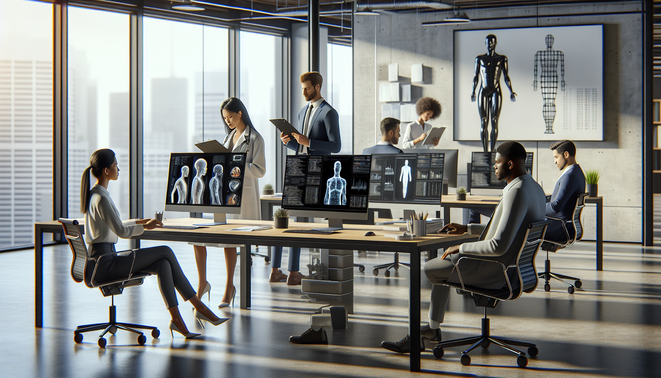
More common than job creation, however, is job transformation. Quality control inspectors become quality assurance analysts, overseeing AI systems rather than manually checking parts. Production line workers evolve into production technicians, monitoring equipment and handling exceptions that machines can’t resolve. Maintenance workers transition from reactive repairs to predictive maintenance, using data analytics to prevent failures before they occur.
This transformation fundamentally changes the nature of manufacturing work. Physical labor decreases while cognitive and technical demands increase. Workers shift from task execution to system monitoring, from following procedures to solving novel problems. As Erik Brynjolfsson from Stanford observed, the opportunity lies in “making workers more productive and valuable, not eliminating them.”
Yet displacement remains real for certain roles. Repetitive assembly work, basic material handling, and simple packaging tasks face the highest automation risk. The impact won’t be immediate—this transformation will unfold over 10 to 20 years—but workers in these positions need pathways to transition. The challenge intensifies for older workers, those without post-secondary education, and employees in rural manufacturing communities where alternative opportunities may be limited.
The critical question isn’t whether displacement will occur, but whether we’ll support workers through the transition. Research from the Brookings Institution puts it plainly: “Technology is not destiny—policy choices determine outcomes.”
The Skills That Matter in the AI Era
What does a successful manufacturing career look like when AI becomes your coworker? The answer combines technical capabilities with distinctly human strengths.
On the technical side, data literacy has become non-negotiable. Manufacturing workers increasingly need to interpret dashboards, understand statistical trends, and make data-informed decisions. This doesn’t require becoming a programmer, but it does mean developing comfort with analytics tools and basic AI concepts. Understanding how to collaborate with intelligent systems—training them, troubleshooting their errors, knowing when to override their recommendations—represents another essential capability.
Familiarity with the broader smart manufacturing ecosystem matters too: Internet of Things sensors, cloud computing basics, cybersecurity principles, and digital twin technologies. Workers need enough understanding to operate effectively in interconnected, digitally-enabled production environments.
Yet the most valuable skills may be those AI cannot replicate. Complex problem-solving for non-routine situations. Creative thinking for process improvement. Judgment calls that require understanding context and nuance. These human capabilities become more valuable precisely because they complement AI’s strengths in pattern recognition and routine optimization.
Adaptability itself may be the meta-skill that matters most. The workers who thrive will be those who embrace continuous learning, remaining comfortable with technological change throughout their careers. Industry experts suggest workers will need 50 to 200 hours of initial training for AI-augmented roles, followed by ongoing learning equivalent to 2 to 4 weeks annually.
How workers can prepare:
- Pursue data analysis and digital literacy training through community colleges or online platforms
- Seek employer-sponsored upskilling programs focused on AI and automation
- Develop cross-functional collaboration skills by working with technical teams
- Build a continuous learning habit rather than treating education as a one-time event
- Consider certifications in manufacturing data analysis, collaborative robotics, or smart manufacturing
Educational institutions are adapting too. Community colleges are developing AI-focused manufacturing programs. Technical schools are integrating data analytics into traditional trades. Apprenticeships are being modernized to include automation training. These pathways provide accessible options for workers at various career stages.
Navigating the Transition Ahead
The transformation of manufacturing employment presents both genuine opportunities and serious challenges. The optimistic scenario—where AI augments human capabilities, creates higher-quality jobs, and generates net employment growth—is achievable. But it’s not inevitable.
Reaching the positive outcome requires action from multiple stakeholders. Employers must invest in workforce development alongside technology implementation. Research suggests companies should allocate 2 to 3 percent of payroll to upskilling initiatives. Those that do report three times better outcomes than those focused solely on technology deployment.
Workers bear responsibility too—for embracing learning opportunities, developing digital literacy, and cultivating the adaptability this era demands. The days of learning a trade once and applying it unchanged for forty years are over. The good news? The emerging roles often offer better working conditions, higher pay, and more engaging work than the repetitive tasks they replace.
Policymakers face perhaps the heaviest responsibility. Workforce development programs need substantial investment—recommendations suggest $50 to 100 billion in the United States alone. Community colleges require funding to build AI-focused curricula. Displaced workers need support during transitions. Small manufacturers need assistance adopting technologies that large competitors implement easily.
The future of manufacturing employment isn’t predetermined. As Klaus Schwab of the World Economic Forum notes, success depends on “creating ecosystems that enable continuous learning.” The question isn’t whether AI will transform manufacturing work—it already is. The question is whether we’ll build the support structures that allow workers to transform alongside it.
For those willing to adapt, the manufacturing sector may offer more opportunity in the next decade than it has in the previous three. The factories of tomorrow need workers who can bridge the gap between human insight and machine precision. That’s not a job for AI alone—it’s a job for the augmented workforce we’re building together.