When artificial intelligence started appearing as the star of Super Bowl commercials—not just behind the scenes, but front and center in brand messaging—something fundamental shifted. Companies like Svedka and Anthropic aren’t just using AI to create their ads; they’re making AI itself the story. This isn’t a glimpse into the future. This is the present, broadcast to 100 million viewers at $7 million per 30-second spot.
For anyone paying attention to the future of work, these ads represent far more than clever marketing. They’re a cultural signal flare: AI has moved from experimental technology in research labs to mainstream business reality. And that transition is rewriting job descriptions across entire industries faster than most workers—or employers—are prepared to handle.
The question is no longer whether AI will reshape creative work. It’s how quickly, how completely, and whether we’ll be ready.
The Creative Revolution Nobody Ordered
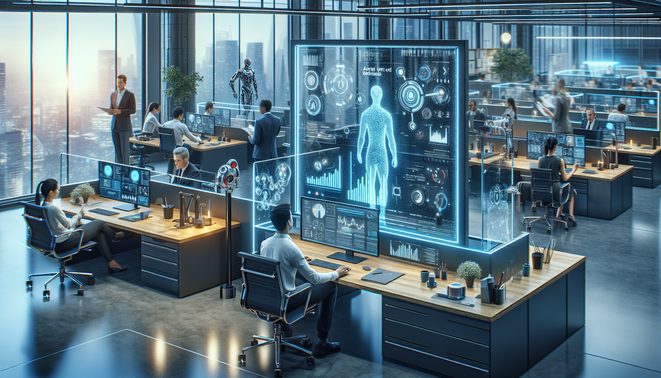
Walk into any major advertising agency today and you’ll find a workplace transforming at breakneck speed. Tools that generate professional-quality images from text descriptions, AI systems that draft dozens of headline variations in seconds, and algorithms that predict campaign performance before a single ad runs—these aren’t future technologies. They’re Tuesday.
The advertising industry makes for a particularly revealing case study because it sits at the intersection of creativity and commerce, art and analytics. If AI can handle this complex blend, what industry is actually safe? The answer appears to be: fewer than we thought.
Marketing departments are discovering they can produce in days what previously took weeks. A campaign that once required a photographer, art director, copywriter, and multiple rounds of revisions can now generate initial concepts before lunch. Generative AI doesn’t call in sick, doesn’t need benefits, and works 24/7 without complaint.
But here’s where the story gets more nuanced than simple replacement. The most sophisticated companies aren’t firing their entire creative teams. They’re restructuring them. The junior copywriter who once spent days writing headline variations? That role is vanishing. The senior creative director who can prompt an AI system to generate options, then apply years of brand wisdom to select and refine the best? That person just became more valuable.
The Great Reconfiguration
Understanding what’s happening to jobs requires abandoning the simple automation-versus-human framework. The reality emerging is more complex: a labor market reorganizing itself into three distinct tiers.
At the top, strategic roles are expanding. Creative directors are evolving into what might be called “AI orchestrators”—professionals who understand both the capabilities of various AI tools and the irreplaceable human elements of brand storytelling. These roles command premium salaries precisely because they require both technical fluency and the kind of emotional intelligence that remains beyond machine capabilities.
In the middle, traditional jobs are being hollowed out. Mid-level designers, copywriters, and producers—the backbone of creative agencies for decades—face the most acute pressure. Their work is sophisticated enough to have been well-compensated but routine enough that AI systems are learning to replicate it. This squeezed middle represents the genuine human cost of this transition.
At the bottom, new entry-level roles are emerging, though often at lower wages than the positions they replace. AI prompt refiners, content moderators who review AI outputs, and quality checkers who ensure brand consistency—these jobs require less specialized training but also offer fewer paths to advancement.
The pattern repeats across creative industries. Stock photographers watch generative AI produce images that are “good enough” for most commercial purposes. Video editors find AI handling basic cuts and transitions, leaving them to focus on complex projects—or leaving them out of work entirely if they can’t make that leap. Voiceover artists compete with AI synthesis that can replicate human speech with unsettling accuracy.
Yet the story isn’t purely one of displacement. New roles are genuinely emerging. Companies need specialists who can train AI models on brand-specific voice and values. They need ethics officers who can navigate the thorny questions of deepfakes in advertising and algorithmic bias in targeting. They need integration experts who can connect various AI tools into coherent workflows.
As one marketing technology analyst put it: “AI won’t replace marketers, but marketers who use AI will replace those who don’t.” That compressed wisdom captures both the opportunity and the threat.
The Skills That Matter Now
If you’re trying to build a career that survives contact with artificial intelligence, you need to think in terms of complementarity, not competition. What can you do that AI cannot, or at least cannot do as well?
The technical skills are obvious but worth stating clearly: AI literacy isn’t optional anymore. You don’t need a computer science degree, but you do need to understand what different AI tools can and cannot do, how to prompt them effectively, and how to evaluate their outputs critically. Basic familiarity with data analysis, even simple coding for marketing automation—these transition from nice-to-have to essential.
But the more interesting insight is which human skills are appreciating in value. Empathy and cultural intelligence—the ability to understand what will resonate with audiences on an emotional level—remain stubbornly difficult for AI systems. Strategic thinking that considers multiple variables, weighs trade-offs, and makes judgment calls based on incomplete information: still a human domain. Ethical reasoning that can navigate the gray areas of responsible AI use: definitely human territory.
The workers thriving in this environment are those who’ve developed what might be called “hybrid skills”—the ability to collaborate with AI systems rather than compete against them. They know when to use AI for rapid iteration and when human creativity is non-negotiable. They can curate from dozens of AI-generated options with the trained eye of an expert. They maintain brand authenticity while leveraging AI efficiency.
Educational institutions are scrambling to catch up. Marketing programs are adding AI courses, often taught by instructors who are learning just months ahead of their students. New credentials are emerging: “AI-Enabled Creative Professional” certifications, platform-specific training for tools that didn’t exist two years ago.
But the uncomfortable truth is that formal education is moving too slowly for the pace of change. The workers adapting most successfully are those engaging in continuous, self-directed learning—joining AI marketing communities, experimenting with new tools, and rebuilding their skill sets every 18 months.
Navigating the Transition
So where does this leave us? The AI revolution in advertising—announced to the world via Super Bowl commercials—offers both cautionary tale and roadmap.
For individual workers, the imperative is clear: proactive adaptation isn’t optional. Waiting to see what happens is choosing to be left behind. That means getting hands-on experience with AI tools, deliberately developing skills AI can’t easily replicate, and building career resilience through continuous learning. It means making peace with discomfort, because the technologies reshaping work aren’t slowing down.
For organizations, the responsibility runs deeper. Companies capturing productivity gains from AI need to invest in workforce transition, not simply pocket the savings. That means robust retraining programs, pathways for existing employees to move into new roles, and ethical frameworks for managing displacement when it’s unavoidable. The companies that view AI as a tool to empower workers, not merely replace them, will build sustainable competitive advantages through loyalty and institutional knowledge.
For society broadly, the policy implications are urgent. We need educational systems that prepare students for AI collaboration from the start. We need accessible reskilling programs at scale for workers in mid-career. We need labor protections and income support mechanisms that help people weather transitions. And we need serious conversations about how the productivity gains from AI get distributed—whether they flow primarily to shareholders and AI companies, or benefit workers and consumers as well.
The AI transformation of creative work isn’t a future scenario to debate. It’s a present reality to navigate. Those Super Bowl commercials featuring AI prominently weren’t predictions. They were announcements that the future of work has arrived, is being televised, and won’t wait for anyone to be ready.
The workers who thrive in this landscape will be those who combine technological literacy with irreplaceable human judgment, who approach AI as collaborator rather than competitor, and who commit to perpetual reinvention. That’s a demanding set of requirements. But it’s also, potentially, a path to work that’s more strategic, more meaningful, and more distinctly human than what came before.
The transformation is underway. The only question left is: what role will you play in it?