Marketing’s AI Revolution: Your Job in 2027
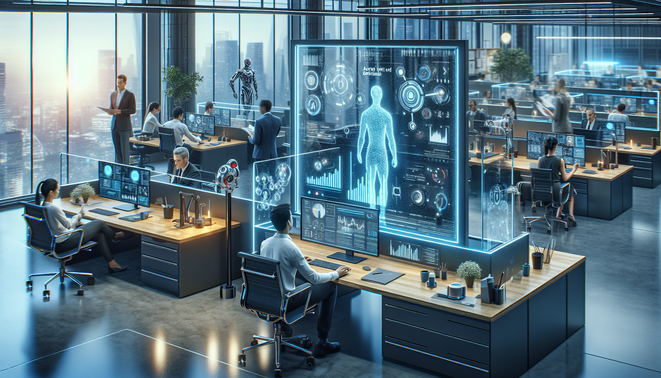
Picture this: It’s Monday morning, and a marketing manager logs into her dashboard. Within seconds, an AI system has analyzed weekend customer behavior, adjusted ad spend across twelve platforms, generated personalized email variants for 50,000 customers, and flagged three emerging brand sentiment issues. Her job? Decide which strategic opportunities to pursue and which AI recommendations to override. This isn’t science fiction—it’s marketing in 2024, and the transformation is just beginning.
The convergence of artificial intelligence and marketing has reached an inflection point. With AI marketing tools reaching a $20 billion market and growing at 28% annually, we’re witnessing something far more profound than another technology trend. We’re watching an entire profession reinvent itself in real-time, creating both unprecedented opportunities and genuine anxiety about what comes next.
The Transformation Underway
Today’s AI marketing systems have moved beyond simple automation into genuinely intelligent decision-making. Machine learning algorithms now predict customer behavior with startling accuracy, natural language processing generates content that passes for human-written, and computer vision analyzes brand presence across millions of images instantly. According to McKinsey research, current AI technologies can automate roughly 45% of marketing activities—not someday, but right now.
The pace of adoption tells the story. Enterprise adoption of AI marketing platforms jumped to 67% in 2024, driven by compelling economics and competitive pressure. When your competitor can test a thousand message variations in the time it takes you to write one email subject line, standing still isn’t an option. E-commerce companies deploy AI for real-time personalization, B2B firms use predictive lead scoring to focus sales efforts, and media companies have handed over most programmatic advertising to algorithmic systems.
What makes this transformation different from previous technological shifts is its comprehensiveness. AI isn’t just changing how we execute marketing tasks—it’s fundamentally altering what marketing work means. The traditional career ladder from coordinator to specialist to manager is being replaced by something more complex and, frankly, more uncertain.
The Job Market Reconfiguration
Here’s where the conversation gets interesting, and where simplistic narratives about robots stealing jobs fall apart. The World Economic Forum projects a net increase of 2 million marketing jobs globally by 2027, even as AI transforms the field. How can jobs simultaneously be displaced and created? The answer lies in understanding that we’re not experiencing simple substitution, but rather a complete reconfiguration of marketing work.
The displacement side is real and shouldn’t be minimized. Entry-level positions that primarily involve data entry, basic content creation, or routine campaign coordination face the highest automation risk. Junior media buyers watch as programmatic AI eliminates manual ad placement. Marketing research assistants see their data collection work automated. One EdTech CEO put it bluntly: “Traditional marketing education is becoming obsolete without AI integration.”
But displacement tells only half the story. Entirely new roles are emerging with substantial salaries attached. Marketing Data Scientists command $110,000 to $180,000, combining machine learning expertise with marketing domain knowledge. AI Marketing Strategists design AI-powered programs at $95,000 to $150,000. A new role called Prompt Engineering Specialist—someone who optimizes inputs for AI content generation—earns $75,000 to $120,000. Companies face a talent crisis with over 400,000 unfilled positions requiring AI marketing skills.
Most significantly, existing roles are transforming rather than disappearing. A content marketing manager’s job used to involve overseeing writers and creating editorial calendars. Now it means orchestrating AI content generation, ensuring brand voice consistency across AI outputs, and making strategic decisions about where human creativity adds irreplaceable value. As a Harvard Business Review analysis noted, “The key is not replacing marketers with AI, but empowering them.”
Social media managers shift from manual posting to strategy and AI tool optimization. Marketing analysts move from describing what happened to predicting what will happen next. SEO specialists evolve from keyword research to understanding how AI algorithms think. In each case, the tactical execution moves to machines while the strategic thinking becomes more valuable—and more demanding.
The uncomfortable truth? This transformation is creating a barbell effect in the job market. High-skill positions commanding premium salaries are expanding. Sophisticated strategic roles that combine AI literacy with marketing expertise are in desperate demand. Meanwhile, entry-level positions requiring only basic skills are contracting. The middle is being squeezed. Marketing roles requiring AI skills command salary premiums of 25-40%, while those without are stagnating or declining.
Skills for the AI Era
So what separates thriving professionals from struggling ones in this new landscape? The answer isn’t simply “learn to code,” though technical literacy matters more than ever before. Rather, success requires a particular combination of capabilities that might seem contradictory: deep technical fluency and distinctly human skills that machines can’t replicate.
On the technical side, marketing professionals need genuine AI literacy—not just knowing which buttons to push, but understanding how these systems work, what they can and cannot do, and when to trust their recommendations. Data analytics has moved from nice-to-have to essential, with SQL and Python increasingly appearing in marketing job descriptions. Familiarity with the major AI platforms—Salesforce Einstein, Adobe Sensei, HubSpot AI—functions as the new baseline competency.
But here’s what many people miss: as AI handles more tactical execution, distinctly human capabilities become more valuable, not less. Critical thinking—the ability to evaluate AI outputs for validity and recognize when algorithmic optimization might damage long-term brand value—is increasingly precious. One MIT researcher observed, “Marketers who thrive will translate AI insights into human-centered strategies.” Creative strategy, emotional intelligence, ethical decision-making, and cross-functional collaboration represent competitive advantages that machines won’t replicate anytime soon.
The most intriguing skill might be adaptive learning itself. The half-life of marketing skills has collapsed from five years to just 2.5 years due to AI advancement. In this environment, your ability to continuously learn and evolve matters more than any specific skill you possess today. Growth mindset, comfort with experimentation, and self-directed learning have shifted from personality traits to professional requirements.
Educational institutions are scrambling to keep pace. Seventy-eight percent of marketing programs have added AI-related courses in just the past two years. Universities are forming partnerships with technology companies—like the Converted-AASTMT collaboration—because traditional academic faculty often lack practical AI expertise. Alternative credentials through bootcamps, professional certifications, and micro-credentials are exploding, with AI marketing course enrollments up 300% since 2023.
The Path Forward
Where does this leave us? Neither in a utopian future where AI handles all the boring work while humans do only creative tasks, nor in a dystopian landscape of mass unemployment. The reality is messier, more challenging, and ultimately more interesting than either extreme.
For individual professionals, the message is clear: engage now, not later. Experiment with AI marketing tools, even if they’re not perfect. Develop both technical capabilities and distinctly human skills. Invest in continuous learning as a permanent practice rather than a one-time event. And perhaps most importantly, cultivate the judgment to know when AI recommendations should be followed and when they should be overridden.
For organizations, the imperative is investment in people alongside investment in technology. Companies are spending $15-20 billion annually on marketing reskilling programs, and that number needs to grow. The firms that will win aren’t those with the most sophisticated AI systems, but those that most effectively combine AI capabilities with human insight and creativity.
For educational institutions, the challenge is unprecedented speed. Traditional academic processes move too slowly for a field where foundational skills change every 2.5 years. Innovation in curriculum design, deeper industry partnerships, and a commitment to preparing students for jobs that don’t yet exist are essential.
The transformation of marketing work through AI is neither catastrophe nor panacea—it’s simply the future arriving faster than expected. Those who engage with curiosity rather than fear, who develop both technical and human capabilities, and who maintain their capacity to learn and adapt will find extraordinary opportunities ahead. The question isn’t whether AI will change your marketing career. The question is whether you’ll help shape that change or simply react to it.